bioresonance
Does Being Slim Always Mean Being Healthy?
24 maj 2021
Why does body composition matter?
Let's be honest. When we talk about diet and exercise, the conversation often comes down to one thing: the number on the scales. Lose a few kilos. Gain a few kilos. Get back to your target weight.
But your body is more than a number
Two people of the same height and weight can have very different body compositions. One may have more muscle mass, while the other has a higher proportion of body fat.
The difference isn't always visible on the scales.
Body composition describes the proportions of fat, muscle, water and other components in your body. Understanding these proportions can give you a more useful starting point for setting personal goals and tracking changes over time.
Body composition describes the proportions of fat, muscle, water and other components in your body. Understanding these proportions can give you a more useful starting point for setting personal goals and tracking changes over time.
BMI: useful, but not the whole picture
You've probably heard of BMI, or Body Mass Index. BMI is calculated using your weight and height:
BMI = weight (kg) / height2 (m)
It's a widely used screening tool that can help assess weight categories. But it has its limitations: BMI doesn't distinguish between muscle and fat, or show where body fat is stored.
That's why the number alone doesn't tell the whole story.
For example, someone who builds muscle through strength training may weigh more without having a high proportion of body fat. And someone whose weight falls within the usual BMI range may still benefit from a closer look at their muscle mass and body fat distribution.
BMI can be a useful piece of information. It simply works best when considered alongside other factors.
What happens when you start changing your habits?
Imagine you've started eating differently, moving more or following a new exercise routine. You're feeling motivated. You're making changes. And naturally, you want to know whether they're working.
But what if the scales barely move?
That doesn't automatically mean nothing is happening.
You may be losing body fat while maintaining or building muscle. Your body weight might change only slightly, even as your body composition changes.
The opposite can happen, too. A lower number on the scales doesn't tell you exactly how much of the weight you've lost came from body fat, muscle or body water.
That's where body composition analysis can help.
It gives you more information to work with, so you can follow your progress with a clearer picture of what's changing.
Why the balance between muscle and fat matters
Body fat has important functions. Your body needs it. Muscle matters, too for movement, strength and everyday activities.
The aim isn't to get your body fat as low as possible or to build as much muscle as you can.
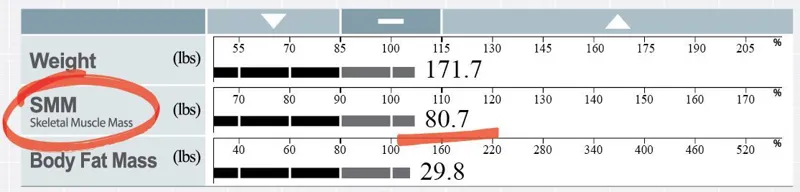
It's to understand your individual needs and work towards a healthy balance that supports your age, lifestyle and goals.
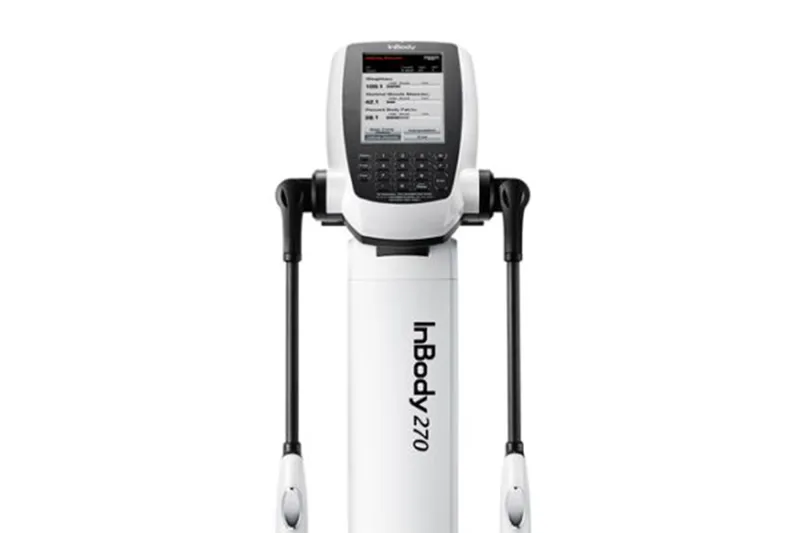
Body fat distribution can also matter. Visceral fat is stored deep in the abdomen, around internal organs, and is associated with certain health risks when present in excess. A standard scale and BMI cannot directly measure it, although body composition devices such as the InBody 270 provide an estimate of visceral fat level.
This is another reason not to judge your health by appearance or weight alone.
Whether you're working towards a weight goal, building strength, changing your eating habits or simply curious about your body, understanding your body composition can be a useful place to start.
Meet the InBody 270 body composition analyser
At Perun PROTECT, we use the InBody 270 to help you look beyond body weight.
The InBody 270 uses bioelectrical impedance analysis (BIA) to estimate body composition. It measures across five body segments : your right arm, left arm, trunk, right leg and left leg and provides a detailed report to help you understand your results.
What can your InBody 270 report show you?
Your report may include:
Body weight
- your current weightBody composition
- estimates of total body water, total protein and mineral mass and body fat mass.Skeletal muscle mass
- an estimate of the muscle attached to your bonesPercentage of body fat
- the percentage of body weight that is fatBMI
- your Body Mass IndexSegmental lean mass analysis
- an estimate of lean mass in your arms, legs and trunk.Segmental fat analysis
- estimates of fat distribution across the same body segments.Visceral fat level
-an estimate relating to fat stored around the internal organsBody Composition index
- a measure of your overall body composition levelWaist-to-hip ratio
- a measure of the relationship between waist and hip circumference.Basal metabolic rate (BMR)
- the number of calories your body needs to maintain basic functionsAdditional information
- including an InBody score and estimated calorie expenditure for selected physical activities.
The results give you more than a weight reading. They can help you and your nutrition professional discuss your current body composition, set realistic goals and monitor changes over time.
As with any body composition assessment, results are estimates and should be interpreted in context. Hydration and other factors can affect BIA measurements, so following consistent testing conditions helps when comparing results
You don't need to wait until you want to lose weight to understand your body better.
Maybe you're starting a new exercise routine. Maybe you want to maintain muscle as you get older. Perhaps you're changing your eating habits and would like a clearer way to follow your progress.
Whatever brings you here, the first step is the same understand where you're starting from
At Perun PROTECT, we can help you make sense of your InBody 270 results and discuss how they fit into your individual nutrition and wellbeing goals.
No guesswork. No one-size-fits-all plan. Just useful information and a personal approach.
Your body is unique. Your approach should be, too.
Ready to learn more about your body composition?
Book your InBody 270 body composition analysis at the Perun PROTECT Centre for Nutrition and Bioresonance.
Get in touch to arrange your appointment.
Your Perun PROTECT team
Small steps. Personalised care. Lasting change.